Three generations in the New York Celtic Medical Society
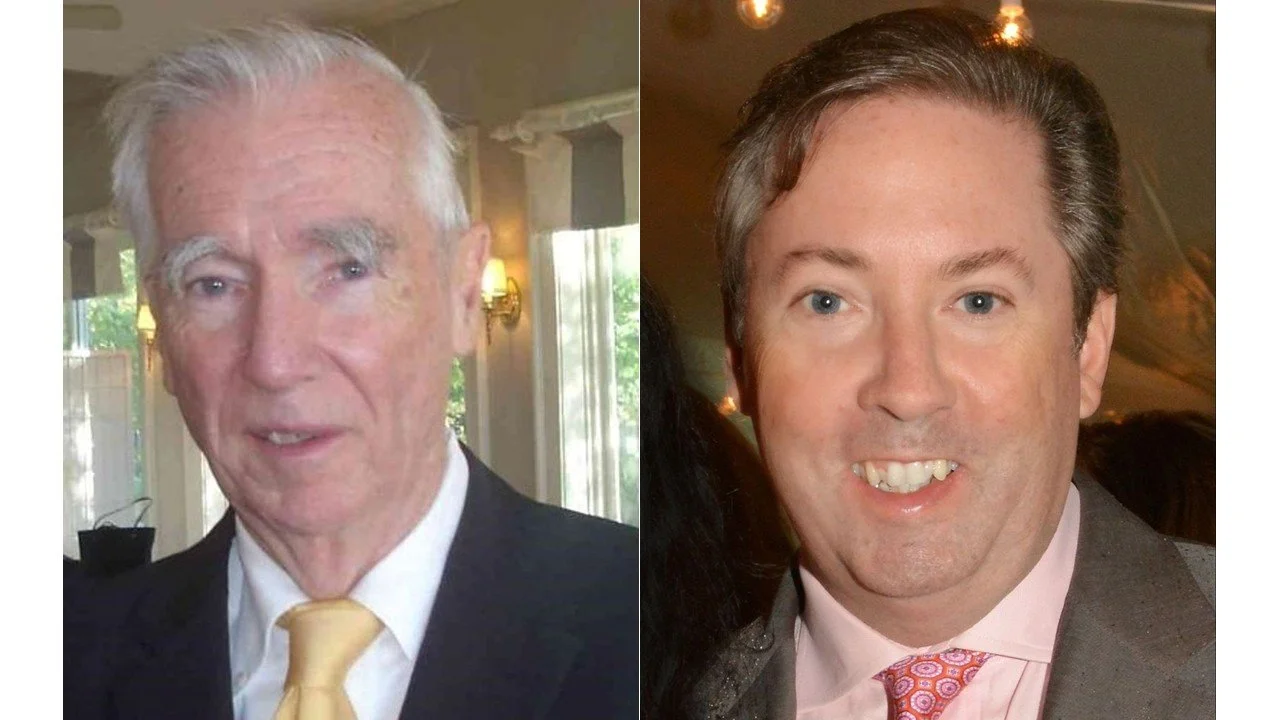
In April 2022, John D. Cahill III shared with the New York Celtic Medical Society (NYCMS) and his son, John D. Cahill IV, his reminiscences about his life in medicine, his family, and the three-generation history of the Cahill family’s involvement in the NYCMS.
Tragically, by December 2023, both father and son had passed away. We honour the memory of the Cahill family with the renaming of the society’s major recognition of outstanding colleagues as the Cahill Healer’s Award.
The first member of the family to join the NYCMS was John D. Cahill II. He was born in 1907 in New York, son of the first in the line of John D. Cahills, an immigrant from Rathmore in County Kerry who became a police officer, and a mother whose father was a bookie from Dublin. John Cahill II went to medical school in Georgetown in Washington DC, a Jesuit institution, and became the first physician in the family.
He opened a practice in the family home in Bronx, near the IRT Dyre Avenue Line on the subway known as the Dinky. This area of the Northeast Bronx on the border of Mount Vernon was home to an Irish community. When he started his career, doctors were unable to do much for patients unless they could perform surgery, but then came antibiotics and everything changed. Dr. Cahill was a family practitioner who specialized in chest disease, in an era when tuberculosis was prominent. He supervised the Riverside Hospital on North Brother Island, close to Riker’s Island, where most of the patients had tuberculosis, and one patient was an asymptomatic carrier of typhoid fever, Mary Mullen, better known as Typhoid Mary.
His son describes John II as a big in character and in size, and a singer who knew all the lyrics but for whom the tune meant nothing. He was friend and physician to Babe Ruth, whose grandson he delivered, and with whom he would go to Concourse Plaza over near Yankee Stadium for a drink or two.
Prohibition in the 1920s disrupted societies like the NYCMS, which was a quarter century old at that point, but was unable to have meetings with alcohol served in public places. There was, however, a loophole – meetings in private homes could serve alcohol. These groups were referred to as ‘eating medical societies’, of which the NYCMS was probably the only one to survive. John III remembers as a child “coming down from my bedroom and seeing all these doctors sitting around discussing things and drinking. And my mother's wiping her brow, feeding them”. Prohibition paradoxically helped the Society to thrive.
John Cahill II died in 1957 at the age of 50. John III remembers going to the wake and saying "Why is everybody so sad? He's an old man." At this stage John III had graduated medical school and realized that there were many patients from his father’s practice who “wouldn’t go to anyone except for Dr. Cahill”, so the son opened his family practice in the home in which he was born. With a busy obstetrical practice, he initially delivered mothers at Westchester Square, but when that closed, he became the first Irish Catholic with privileges at the Einstein (Weiler) Hospital, invited by former department chair Harold Schulman. John III describes the staff there as “very welcoming and very kind”.
Eventually, his father having been a member before him, John III was invited to be a member of the NYCMS. It was a great honour to be invited, with the major qualification being a physician of Irish ancestry on the physician’s father’s or mother’s side of the family. Brian Curtin, President of the NYCMS from 1963-1965, who extended the invitation, was a Professor of Ophthalmology at Cornell, had a father and uncle who were members of the NYCMS, and married the daughter of another president of the Society. As John III said, “It can't get more Celtic than that”.
John III was joining a society that maintained a lot of formalities. Meetings followed an agenda as outlined by the constitution. Brian Curtin was the last President he remembered who maintained the tradition of wearing black tie to Society events. The major benefit of the Society was the green book, which listed all members, their specialties and contact information. “So if I sit up in the Bronx and somebody had a strange disease, I could just look in the green book and find an appropriate doctor for them” as John III explained. This in effect created a referral network for Irish physicians, who “were excluded from most of the hospitals at that time.”
Society meetings used to be held in the Armory on Lexington Avenue, the home of the 69th Regiment, formed in 1851 by Irish immigrants. John III recalls a meeting that ran late at the Armory when he visited the bathroom, not realizing that the porter was doing his rounds and locked the door while he was inside. He spent a few hours yelling for help before he was eventually rescued. “More embarrassing than traumatic” was his assessment.
The Armory closed for repairs in the 1980s, prompting the Society to move to the New York Athletic Club for its meetings. After a decade and some significant price increases, the Society moved its meetings to The Players, on the South of Gramercy Park, where meetings continue today.
Irish ancestry was not enough to permit membership of the NYCMS, you also had to be a male physician. This led to the biggest internal argument in the Society’s history in the late 1970s, when Cornell oncologist Anne Moore was proposed as a member of the Society, and some members claimed she was not qualified. Dr. Moore was daughter of John D.J. Moore, the US Ambassador to Ireland appointed by John F. Kennedy, and was proposed as a member by Society President Tom Fahey, who felt she was an outstanding Irish-American physician. This provoked outrage in some members, with a couple of resignations in protest. The argument by what John III called “would-be lawyers” was that the Society had “the pronoun ‘he’ throughout the constitution" so the admission of women “could never be allowed because the constitution was written for men.” Women were eventually admitted to the Society decades later, Dr. Moore finally becoming a member in 2017. The tradition of the NYCMS marching in the St. Patrick’s Day parade started under the Presidency of the second women to lead the Society, Dr. Pat Carey, using a banner donated by David Donovan.
John Cahill III remembers a number of prominent Society members. Oliver St. John Gogarty, an ENT surgeon and the inspiration for Buck Mulligan in James Joyce’s Ulysses, spent his last years in New York City. “He was hunted down as soon as he got off the boat. Get that guy” said John III, who remembers Gogarty reading poetry in the family living room. Another member was known for his athleticism, Norbert Sanders, an internal medicine physician on City Island who won the New York and Boston City marathons. Hugh Barber, who went on to a career in Obstetrics and Gynecology, captained the Columbia 1940 football squad back in the era of leather helmets. Other members included Thomas Dwyer, an ophthalmologist who went into politics, Jim Bryan and Tom Mulcahy who served with distinction in the US armed forces, and a Frank Kent who achieved notoriety for killing his wife, eventually incarcerated in an institution for the criminally insane.
Speakers at Society meetings included two New York State Governors, Malcolm Wilson and Hugh Carey. While Carey was the more overtly Irish-American of the two, and Society members felt he would be Vice-President someday, Wilson, who claimed Scottish and Irish ancestry, was the better speaker. “He was more in tune with the group”, as John III put it.
John III was one of three Cahill brothers in the NYCMS. All three bothers attended Fordham University in the Bronx as undergraduates. Like John III, Michael also went to Georgetown, while Kevin went to Cornell for medical school. Michael was a pediatrician in Spring Lake in New Jersey. He was hugely popular with his community, who “got together and had Michael Cahill day” when he retired. Michael in turn left a gift in his will for the town of Spring Lake to have a party when he passed away.
Kevin trained in tropical diseases at the London School of Hygiene and Tropical Medicine, and had a medical practice on Fifth Avenue in New York City. His career included work alongside Mother Teresa in India, and caring for Pope John Paul II and Ronald Reagan after each of them was shot, as they had recently travelled to locations that could have resulted in exposure to tropical diseases. He remains the only physician to be Grand Marshall of the St. Patrick’s Day parade since its inception in 1762.
When asked what he valued about the NYCMS after all the years that he and his family have been involved, John III spoke of the “multi-generational fellowship” and the “feeling of being part of something.” He welcomed the influx of younger membership, and wished he could be around to celebrate our 150th anniversary in 2041.
Past Presidents of the New York Celtic Medical Society:
Kevin M. Cahill 1971-1973
John D. Cahill III 1975-1977
John D. Cahill IV 2015-2017